Complete Guide to Starting a Block Manufacturing Business
The demand for concrete blocks in the construction industry is increasing rapidly as builders move toward modern, eco-friendly building materials. Compared to traditional clay bricks, concrete blocks provide faster construction, higher strength, and improved durability.
Starting a concrete block manufacturing factory can be a highly profitable industrial investment when supported by the right machinery, production planning, and technical knowledge.
IMEXCO International Ltd helps entrepreneurs and construction companies establish modern block manufacturing plants with reliable machinery and expert technical guidance.
Why Start a Concrete Block Factory?
Concrete blocks are widely used in residential, commercial, and infrastructure construction projects. The demand continues to grow due to several advantages.
Key Advantages of Concrete Blocks
• Faster construction speed
• Lower construction cost
• High compressive strength
• Better thermal insulation
• Environmentally friendly production
• Reduced dependence on clay bricks
Due to government restrictions on traditional brick kilns and the growing demand for sustainable building materials, concrete blocks are becoming an essential part of modern construction.
This makes block manufacturing an attractive investment opportunity.
Step 1: Market Research
Before starting a block factory, it is important to analyze the local construction market.
Key factors to study include:
• Demand for blocks in your region
• Number of construction projects
• Existing block suppliers
• Transportation cost to construction sites
• Raw material availability
Areas with rapid construction growth usually offer strong opportunities for block manufacturing businesses.
Step 2: Selecting the Right Location
A suitable factory location is important for efficient production and logistics.
Ideal Location Requirements
• Easy road access for trucks
• Sufficient factory space
• Availability of electricity and water
• Close to construction markets
• Availability of raw materials
A typical block factory requires 10,000 to 40,000 square feet of land, depending on production capacity.
Step 3: Required Raw Materials
Concrete blocks are produced using simple but important raw materials.
Main Raw Materials
• Cement
• Sand
• Stone dust
• Crushed aggregates
• Water
Proper raw material ratios are essential to produce strong and durable concrete blocks.
Experts from IMEXCO International Ltd assist factory owners in selecting the correct material mix for different block types.
Step 4: Machinery and Equipment
The most critical investment in a block factory is the production machinery.
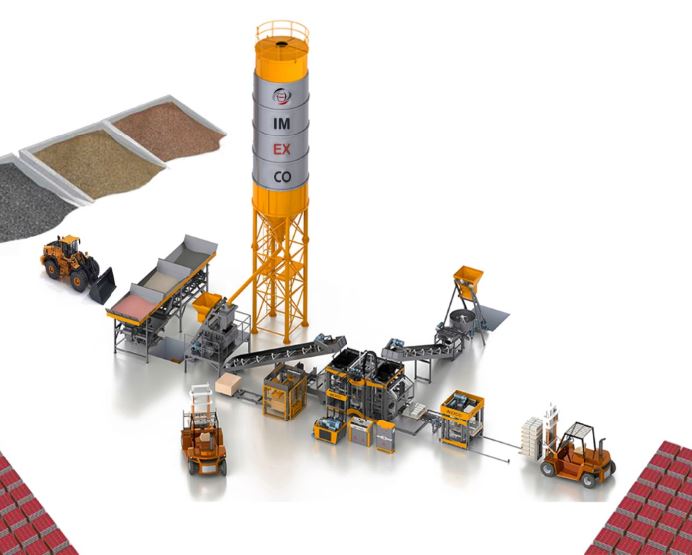
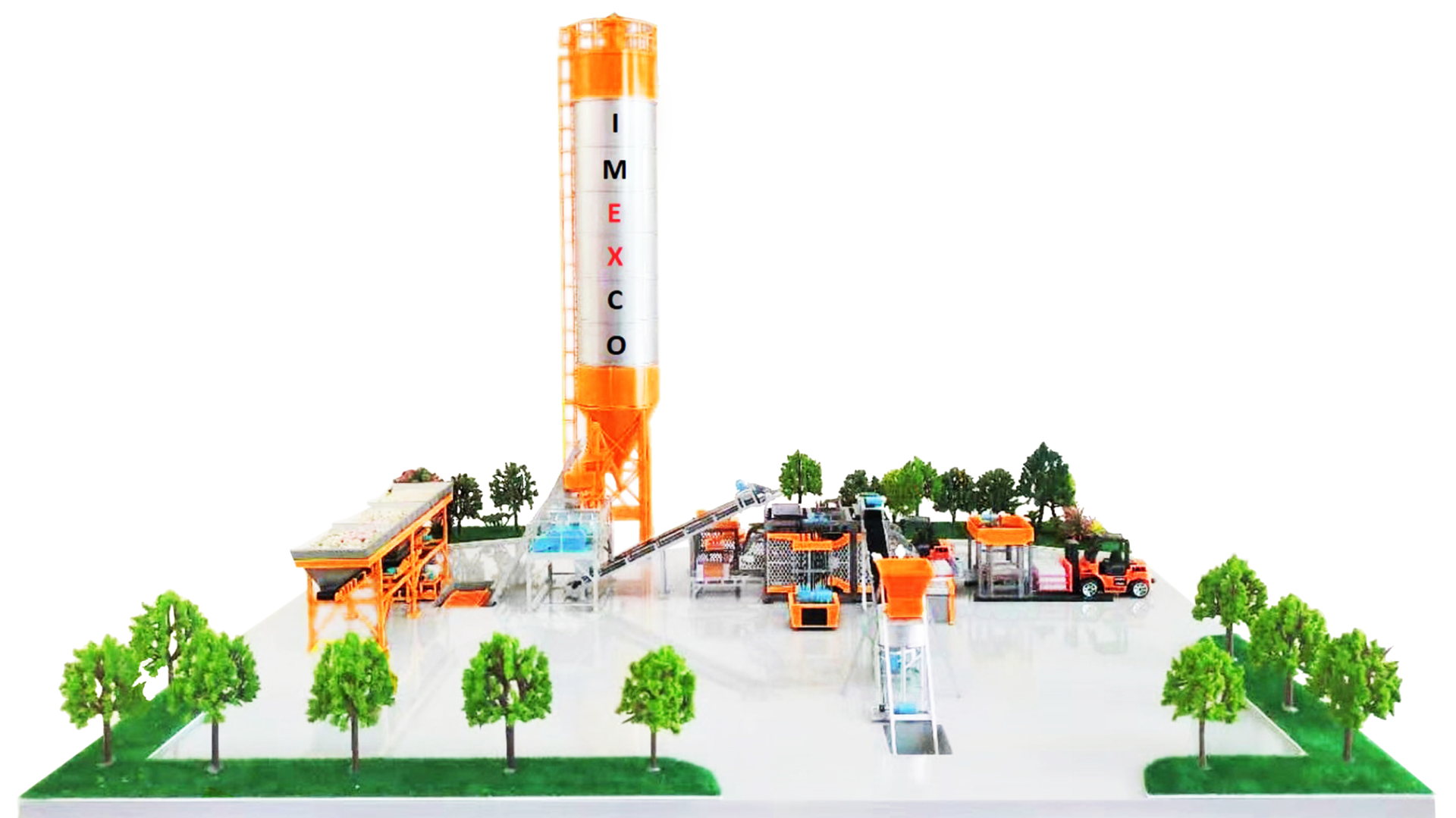
A modern concrete block manufacturing plant usually includes:
Main Machinery
• Automatic Concrete Block Machine
• Concrete Batching System
• Concrete Mixer
• Conveyor System
• Pallet Feeding System
• Automatic Stacker
• Hydraulic System
These machines work together to create an efficient production process capable of producing thousands of blocks per day.
Step 5: Production Process
The concrete block manufacturing process involves several stages.
Block Production Process
- Raw material batching
- Concrete mixing
- Mold filling and vibration
- Hydraulic compression
- Block demolding
- Curing and drying
Modern automatic machines ensure that each block is produced with consistent quality and precise dimensions.
Step 6: Workforce Requirement
A block manufacturing factory typically requires a small team of workers to operate efficiently.
Typical Workforce
• Machine operators
• Raw material handlers
• Quality control staff
• Factory supervisor
• Logistics workers
With modern automation, a factory can operate with minimal labor while maintaining high production output.
Step 7: Production Capacity Planning
The production capacity of a block factory depends on the machinery model selected.
Typical machine capacities include:
Small Factory
4,000 – 6,000 blocks per shift
Medium Factory
10,000 – 15000 blocks per shift
Standard Industrial Factory
20,000-25,000 blocks per shift
Large Industrial Factory
40,000+ blocks per shift
Selecting the right capacity depends on investment budget and market demand.
Step 8: Profit Potential
Concrete block manufacturing can generate strong returns because production costs are relatively low compared to market selling prices.
Profitability depends on several factors:
• Production efficiency
• Raw material cost
• Local market demand
• Transportation cost
• Product quality
With proper planning and efficient machinery, block factories can achieve stable and long-term profitability.
How IMEXCO International Ltd Supports Your Project
Starting a block factory can be complex for new investors. That is why IMEXCO International Ltd provides complete project support.
Our Services
• Block factory project consultation
• Machinery selection guidance
• Factory layout design
• Installation and commissioning
• Operator training
• Technical support and spare parts
Our goal is to help entrepreneurs build successful and sustainable block manufacturing businesses.
Start Your Block Factory Today
The construction industry continues to expand, creating strong demand for modern building materials such as concrete blocks and pavement tiles.
With the right planning and reliable machinery, starting a block manufacturing factory can become a highly profitable industrial venture.
Contact IMEXCO International Ltd today to discuss your project and receive expert guidance for establishing your block production plant.
Contact Information
IMEXCO International Ltd
Hotline
+8801713429860
+8801713429861